


Pakistani women get involved in leopard conservation
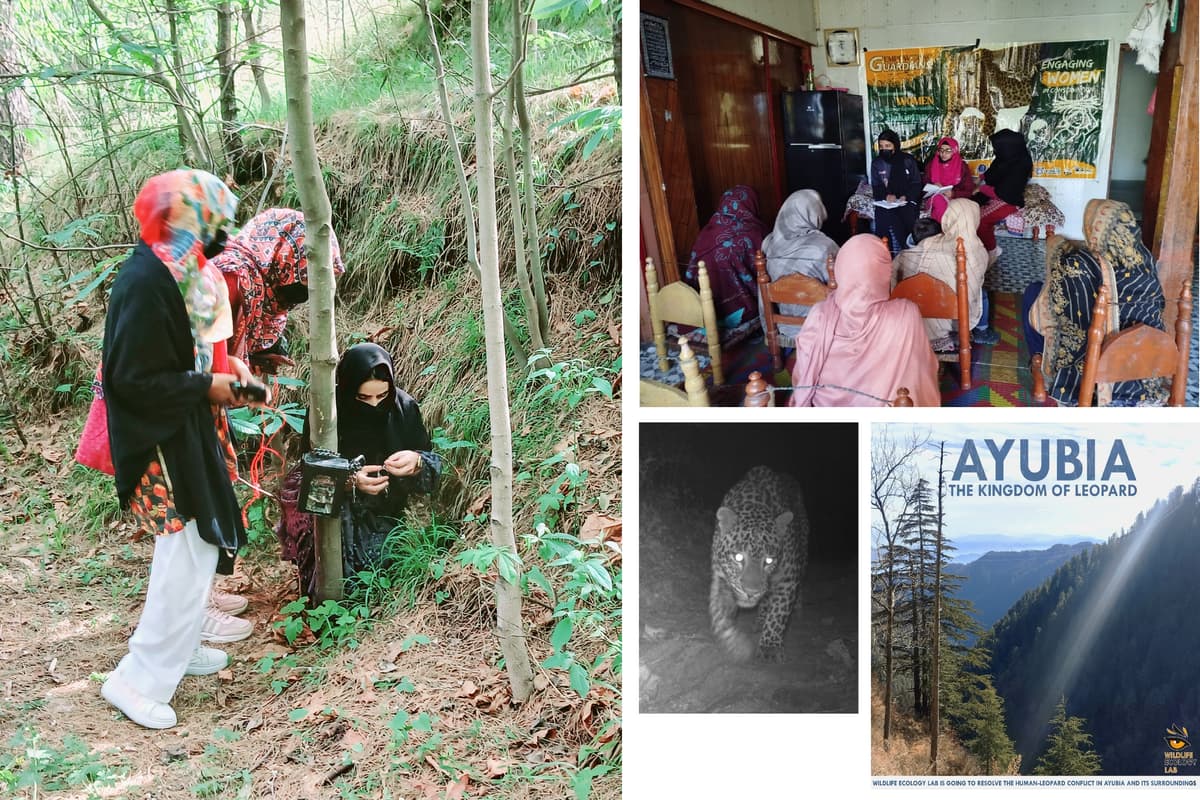
In Ayubia National Park of north-eastern Pakistan, human-leopard interactions have historically led to the tragic loss of human lives – with a disproportionately high impact on women. Women are the primary collectors of fuelwood and fodder, and the main livestock grazers in mountain ecosystems. Despite facing the highest risk of leopard encounters during peak leopard activity hours, traditional awareness-raising programs have predominantly targeted men. Cultural and social boundaries often prevented male researchers and social activists from directly engaging, communicating, and educating women in these rural mountain communities, creating a critical gap in mitigating human-leopard conflicts.
To address this critical disconnect, the Wildlife Ecology Lab at the University of Haripur, in collaboration with our PeLeWG and with funding provided by the Global Leopard Conference, has successfully completed the innovative project "Empowing the guardians: involvement of women in leopard conservation in Pakistan”. This groundbreaking initiative has applied a science-backed, community-oriented approach structured into three vital pillars:
- Scientific Research and Temporal Monitoring: studying local leopard spatial distribution, movement patterns, and activity periods to precisely map temporal overlaps between human activities and leopard presence
- Targeted Female Education and Behavior Literacy: directly engaging local women with tailored ecological knowledge and teaching them about leopard behavior, peak activity hours, and practical safety protocols during fieldwork
- Capacity Building and Empowerment: strengthening local capacity by training local women alongside wildlife staff to foster sustainable community-led stewardship
By aligning rigorous scientific ecological data with direct community engagement where it matters most, this initiative closes a long-standing conservation gap, empowering local women to protect both their community and endangered leopards in Pakistan.